Arriving in Thailand · Guide
Renting in Thailand: Deposits, Contracts, TM30 and the Scams to Dodge (2026)
Last checked: 15 November 2026. The rent figures below reuse the numbers already checked in this site's cost guides (#3 Chiang Mai, #5 Bangkok vs Chiang Mai, #6 Thailand-wide overview, #15 Bangkok costs) — they are not re-surveyed here. The law in §4–§5 is the 2025 consumer-protection notification, in force since 4 September 2025; most English pages still quote the superseded 2018 rules, so if another site tells you the deposit cap is one month and the threshold is five units, it is out of date. All dollars are US dollars; baht converts at ฿33.5 = $1 (re-checked 10 November 2026 in the #15 round: Finnhub/OANDA ฿33.41, Wise ฿33.47). This guide is general information, not legal advice — for a dispute that matters, confirm the current rules with the Office of the Consumer Protection Board (hotline 1166) or a licensed Thai lawyer.
Published Updated
Entry rules and prices change. This guide shows its last check date in the fact-check box below — re-check the visa section before you fly.
Fact check
- Checked on
Sources
- Tilleke & Gibbins — Thailand Strengthens Controls on Residential Lease Contracts (26 Aug 2026): 3-month combined cap, 3+ units, 50% early termination
- Baanlyy — Security Deposits in Thailand: B.E. 2568 notification, Gazette 6 June 2025, in force 4 September 2025
- Baanlyy — Utility Bills in Thailand: government rates vs building sub-meters
- Bangkok Lad — Thailand Electricity Bill: ERC September–December 2026 bands and Ft ฿0.1623
- Visit Thailand — Renting a Condo in Thailand: B.E. 2568 rules and deposit return timetable
- Thailand Law Online — Airbnb in Thailand: Hotel Act B.E. 2547, the monthly line, Supreme Court 4215/2564
- The Bangkok Guide — TM30 Address Reporting: Immigration Act s.38/s.77, 24-hour duty, 2020 one-time filing
- ExitChina — Renting in Thailand (Chinese): B.E. 2568 rules, Tilleke early-termination reading, Bangkok rent cross-check
Dates and sources below come from the article data file. Where official pages do not publish a figure, the article says so instead of picking one number.
At a glance: pick the right kind of place first
The short version: spend your first month in a serviced apartment or hotel, view flats in person, and sign nothing before you have seen the unit, the meter, and the contract in a language you understand. The deposit you hand over is usually two months' rent plus the first month in advance — and since September 2025 the law caps deposit plus advance rent at three months' rent combined, but only when your landlord rents out three or more units as a business. A private owner with one condo is not covered by that cap at all, which is why the contract, the viewing, and the paper trail matter more than the statute. The two bills that surprise newcomers are not the rent: they are the electricity sub-meter, which can nearly double your power bill, and the TM30 form, which is your landlord's legal duty but your problem when immigration asks for it.
| You need | Rent this | Why |
|---|---|---|
| First month, still deciding | Serviced apartment or hotel | No lease, no deposit fight, legal for short stays; view real flats from a real address |
| 3–12 months, one city | Condo unit (1-bed) | Best value per baht in Bangkok and Chiang Mai; building facilities included; agent usually free to you |
| 3–12 months, family or pets | House or townhouse | Space and a garden, but you pay the utilities direct and handle the garden, the bills and the landlord yourself |
| Under 30 days anywhere | Licensed hotel / serviced apartment only | A nightly condo let needs a hotel licence the unit almost never has — see §9 |
| Tight budget, long stay | Older apartment building (not condo) | Cheapest rents, but check the electricity rate first — old apartment blocks are where the ฿7–8 sub-meter lives |
Condo, apartment and house are different products in Thailand, not just different sizes. A condo is a unit in a building with a juristic person (building management), shared facilities, and a title deed per unit — the owner is usually an individual investor, and the building's rules are part of what you are renting into. An apartment is a whole building owned by one landlord, usually older, cheaper, and billed through the building's own meters — this is where utility markups concentrate. A house is a standalone or townhouse rental, often owner-direct, where you usually hold the electricity and water accounts yourself and pay the government rate. A serviced apartment is a hotel-style building with monthly rates, cleaning and reception — the safe landing pad for month one.
1. Where to look, and who pays the agent
Start with the portals, then use Facebook groups and agents to see the same market from the other side. DDproperty is the biggest Thai portal, with the most Bangkok and Chiang Mai listings from agents and owners. Hipflat is condo-focused with good filters. PropertyScout lists in English with agents, mostly Bangkok. FazWaz covers houses and higher-end condos. Then search Facebook for your city plus “expats” or “condo for rent”: the groups carry owner-direct listings the portals miss, and they are also where you can ask about a specific building before you sign — search the building name first, because someone has usually already complained about it.
Agents in Thailand are normally paid by the landlord, not by you — typically one month's rent for a one-year lease, which is why a reputable agent will show you places for free. An agent who asks you for a fee, or for a deposit before a viewing, is not a reputable agent. Use an agent for the viewing and the paperwork, not for the decision: they are paid when you sign, so their incentive is a signed lease, not the right flat. Verify everything they tell you yourself, in §8.
2. What rent actually costs
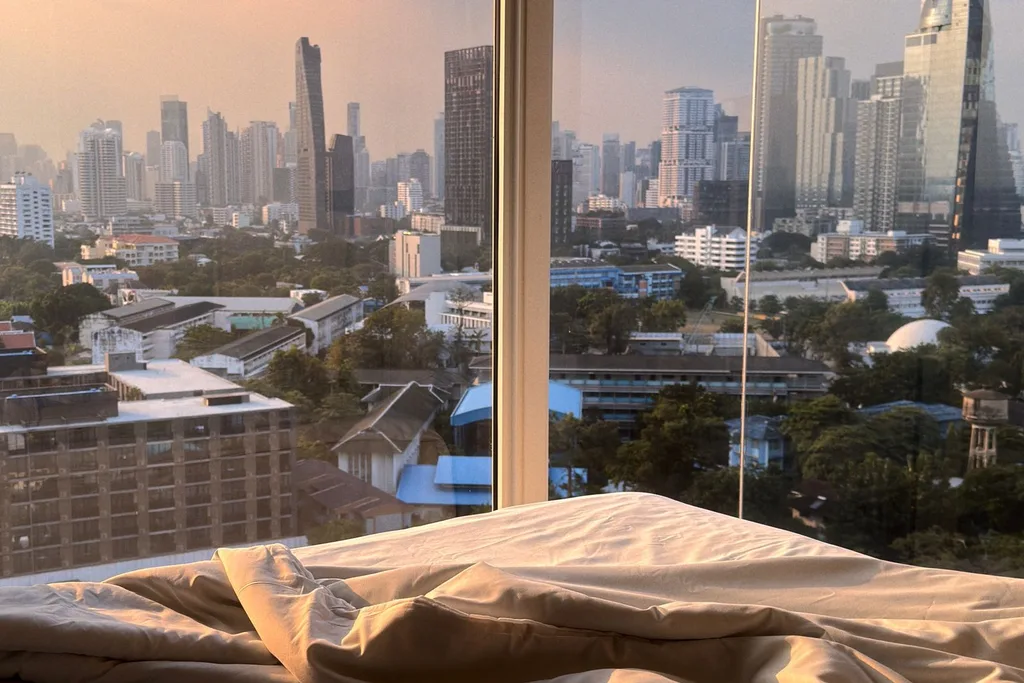
These are the same anchors this site's cost guides already checked — a 1-bedroom, furnished, in 2026:
| Place | Modern 1-bed condo | Older 1-bed / apartment | Notes |
|---|---|---|---|
| Chiang Mai (Nimman, Santitham) | ฿12,000–22,000 | ฿8,000–15,000 | A Nimman 1-bed that was ฿10,000 two years ago is ฿12,000–15,000 now; serviced apartments ฿12,000–30,000 |
| Bangkok near BTS/MRT | ฿15,000–30,000 | ฿8,000–14,000 at outer stations | Sukhumvit/Asok ฿20,000–35,000; Bang Na and the line ends ฿8,000–14,000 — the station, not the city, sets the price |
| Pattaya | ฿12,000–25,000 | ฿8,000–15,000 | Huge condo supply keeps prices soft outside high season |
| Phuket / Koh Samui | ฿18,000–40,000+ | ฿12,000–25,000 | Island rents double in high season; a “cheap” annual rate often means a low-season price with a high-season catch |
Three pricing facts that change the negotiation. First, rent is negotiable, especially for a 6–12 month lease paid on time, and especially outside high season: asking 5–10% below the listing price is normal, not rude, and a landlord with an empty unit in May would rather take ฿2,000 less than another empty month. Second, the listing price is not the monthly cost: add the electricity sub-meter (§5), the water bill, the internet (often ฿500–800 a month if not included), and any building “common fee” the landlord passes on — in a cheap apartment these can add ฿2,000–4,000 a month, which is exactly the gap between the blog-post budget and the real one. Third, high season reprices islands: a Phuket or Samui annual quote can hide a high-season uplift or a 3-month minimum at the high rate, so get the monthly rate for every month of the term in writing, not just the first month.
3. The money before you move in
The market norm is one to two months' rent as a security deposit, plus the first month's rent in advance — so ฿30,000–45,000 up front on a ฿15,000 flat. That norm sits exactly on the legal ceiling for covered landlords, which is the point of the next section. Before that, the three payments to keep separate:
- Security deposit (usually 1–2 months): held against damage and unpaid bills, returned at the end — see §4 for when and how much comes back.
- Advance rent (usually the first month): rent paid before you move in. It is not a second deposit, and it is not extra.
- Booking deposit (usually 1 month, when you reserve a unit before signing): a hold payment while the lease is prepared. It should be credited against your signing payment if the lease goes ahead, and returned if the owner withdraws. Get the booking terms in writing before you pay anything — amount, what it counts towards, and what happens if either side walks away.
4. The 2025 rules: what the law actually says now
On 4 September 2025 a new consumer-protection notification replaced the 2018 rules most English pages still quote. The instrument is the Contract Committee Notification on residential building leasing as a contract-controlled business, B.E. 2568 (2025), published in the Royal Gazette on 6 June 2025. It matters because it changed both who is covered and what the caps are — and the old numbers are still everywhere.
| Rule | 2018 notification (B.E. 2561) — superseded | 2025 notification (B.E. 2568) — in force now |
|---|---|---|
| Who is covered | Landlords letting 5+ residential units as a business | Landlords letting 3+ residential units as a business, including lettings arranged through online platforms; hotels and licensed dormitories excluded |
| Deposit + advance rent | Separate caps: deposit max 1 month, advance max 1 month | Combined cap: deposit + advance rent together max 3 months' rent (monthly leases); 1 year's rent where a long lease is billed annually |
| Utilities | May not exceed the authority's rates | Same — may not bill electricity or water above what the utility charges the landlord, with the calculation method stated in the contract |
| Deposit return | Within 7 days of the end of the lease | Immediately if nothing is claimed; within 7 days if the landlord inspects first; any balance within 14 days after deducting genuine damage — never for normal wear and tear |
| Move-in condition | Not required | Landlord must document the property's condition at check-in (jointly signed report) |
| Ending early | Not covered | Tenant may terminate once at least 50% of the term has passed, with 30 days' written notice |
| Mid-term changes | Rent and fees frozen for the term | Same — rent, utility and service rates cannot be raised mid-term; no lock-outs, no seizing your belongings |
Three consequences follow. First, if your landlord rents out three or more units, the three-month combined cap is your ceiling: 2 months' deposit plus 1 month's advance is the standard deal and it sits exactly on the line — advance rent itself is capped at one month; 2 plus 2 is over it, and the excess term is unenforceable even if you signed it. Second, if your landlord owns one or two units, none of this applies — the Civil and Commercial Code and your contract govern, there is no statutory cap and no statutory refund deadline, and the negotiation in §7 is your only protection. Ask how many units your landlord lets: the answer decides which legal world you are in, and a landlord who will not answer is telling you something. Third, a term that breaks these rules is void even after you sign it — the protection does not depend on you having refused to sign. In practice enforcement is patchy, so treat the rules as leverage in the negotiation and as grounds for a complaint to the OCPB (hotline 1166), not as a guarantee that a bad landlord will behave.
One more warning about the sources you will meet: a few English pages still print the 2018 separate caps (1 month deposit, 1 month advance) and attribute them to the 2025 notification. That reading contradicts the Gazette-dated sources and the OCPB's own enforcement guidance; this guide follows the combined three-month reading.
5. Electricity and water: the hidden second rent
The government residential tariff is roughly ฿3.25–4.42 per unit (kWh) depending on how much you use, plus the Ft fuel adjustment and 7% VAT — an all-in average of about ฿3.86–3.95 per unit before VAT for a typical household, and the OCPB's enforcement benchmark is ฿4.88 per unit. Since 1 September 2026 the bands are: first 200 units at no more than ฿3.00, 201–400 at ฿4.1584, above 400 at ฿4.3583, with Ft held at ฿0.1623 for September–December 2026. Water from the Metropolitan or Provincial Waterworks Authority runs about ฿8–18 per cubic metre.
Most renters do not pay that rate. In a condo or apartment block the building holds the master meter and re-bills each unit through sub-meters at a rate it chooses — commonly ฿6–8 per unit for electricity, sometimes ฿8–9, which inflates the same power by 30–80%. On a 450-unit month that is the difference between about ฿1,880 at the government rate and ฿3,600 at ฿8 a unit — ฿1,700 a month, every month, for the same air conditioning. Ask three questions before you sign, and get the answers in the contract: what is the electricity rate per unit, who bills it, and is it the government meter or a building sub-meter? If the answer is a flat ฿7 or ฿8 with no calculation shown, that is a ฿1,000-plus monthly surcharge dressed as a utility bill — negotiate it down, pick a building on the direct meter, or walk away. A direct MEA/PEA account in your name is the cleanest answer and is common in houses and owner-occupied condos; in an apartment block it is usually not an option, which is why the rate question matters most there. Photograph your meter on move-in day and monthly afterwards, and keep the photos on LINE or WhatsApp so there is a dated record if the bill ever jumps.
6. TM30: your landlord's form, your problem
TM30 is the notification of residence for foreigners under Section 38 of the Immigration Act B.E. 2522 (1979). The duty is on the house-master, owner or possessor — your landlord, or the hotel manager — to notify immigration within 24 hours of a foreigner arriving at the address. It is not your form to file. But you are the one who suffers if it is missing: immigration offices increasingly require a TM30 on the system, matching the address on your application, before they will process an extension of stay or a 90-day report. Our visa-extension guide says the same thing — Chiang Mai agents put TM30 and arrival-record mismatches at more than half of extension refusals.
The fine falls on the landlord: up to ฿2,000 for a house-master who fails to notify (Section 77), and ฿2,000–10,000 for a hotel manager. In practice, when you are the one standing at the counter with a missing TM30, the office will usually let you pay it, file the form and carry on — which is why the practical rule is to make it the landlord's problem in writing before it becomes yours at the counter. Put one sentence in the lease or in a LINE message before you sign: “the landlord will file TM30 within 24 hours of move-in and give the tenant the receipt.” Ask for the receipt (the online system is tm30.immigration.go.th) and keep it with your passport. Since a 2020 Royal Thai Police notification, the landlord files once per stay, not every time you come back from a trip — if a landlord claims they must refile after every border run, they are working from the pre-2020 rule. One contested point: a few secondary sources say the foreigner can also be fined up to ฿2,000 for failing to ensure the report is made; the statute's fine sits on the host, and this guide follows that reading.
7. The contract: read it before you sign
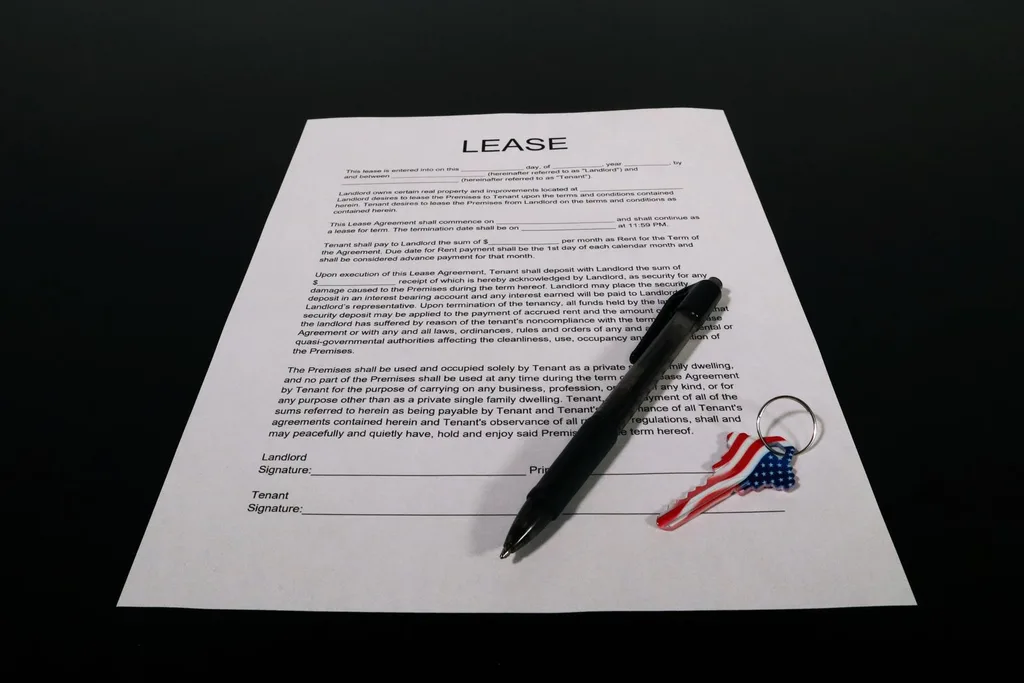
A Thai lease is usually in Thai, sometimes bilingual Thai–English. If it is Thai-only and you cannot read Thai, get a bilingual version or a translation you trust before you sign — never sign a document you cannot read on the strength of a verbal summary. The 2025 notification prescribes standard contract forms for covered landlords; a landlord who refuses to use one, or who hands you a one-page form with blank spaces, is cutting corners you will pay for later. Check these nine things, in order:
- Names and the property: the landlord's name must match the name on the condo title deed (chanote) or house registration, and the unit number, floor and building must match the listing. Ask to see the deed and the owner's ID or passport and check the names match.
- Term and rent: start and end dates, monthly rent, due date, and how rent is paid (bank transfer to an account in the owner's name — keep every receipt).
- The money: deposit, advance rent and booking deposit as three separate lines, each with its amount, and the total — which must not exceed three months' rent for a covered landlord.
- Utilities: the electricity and water rate per unit, who bills, and the calculation method — in the contract, not in a chat message.
- What is included: furniture, appliances, internet, parking, gym and pool access, cleaning — listed, not assumed. Photograph every item on move-in day.
- Maintenance: who fixes what. Air conditioning, water heaters and appliances are normally the landlord's; damage you cause is yours. Get the split in writing, with a response time for urgent repairs.
- Ending the lease: notice period, early-termination penalty (usually forfeiting the deposit — make sure that is actually what the contract says, not what the agent says), and the deposit-return timing from §4.
- No-sublet and house rules: most leases ban subletting, and the building's rules (no pets, no smoking, no short stays) bind you whether or not they are in the lease.
- TM30 clause: the one sentence from §6, in the contract.
Sign two copies, keep one, and keep the move-in condition report with dated photos of every room — walls, floors, appliances, the meter — sent to the landlord on LINE the same day. That report is what gets your deposit back: without it, every scratch is your scratch.
8. Scams and red flags
Rental scams in Thailand almost always target people who are new to the country, in a hurry, or shopping from abroad. The pattern is stable: a listing copied from a real property, priced just below market, with an “owner” who is overseas, cannot meet, and needs a deposit today to hold it. A real Bangkok case from 2026: a two-bedroom at Ideo Q Siam listed at ฿18,000 when the real unit rented at ฿35,000 — the victim transferred a ฿36,000 deposit and the LINE account vanished. A Nonthaburi student lost ฿18,000 the same way in July 2025. The checks that stop it take minutes:
- See it first. Never sign or pay before you have stood in the unit — or, if you are still abroad, had a live video walkthrough with someone you trust. Photos prove nothing; scammers lift them from real listings, and AI-generated interiors now look completely real.
- Price-check it. A 1-bed at Ashton Asoke rents for roughly ฿25,000–35,000. A listing at half that in the same building is not a bargain; it is bait. Compare the same building on two portals before you believe any price.
- Verify the owner. Title deed plus ID, names matching, seen in person at the building. Visit the juristic office and ask whether the unit is available for rent — a five-minute check that ends most scams on the spot.
- Pay the right account. Transfer only to a Thai bank account in the owner's name (or the company's), never to a third party, and keep the receipt. A booking deposit should be about one month, in writing, credited to your signing payment.
- Refuse pressure. “Three other people are viewing tomorrow” and “I need the deposit by tonight” are scripts, not facts. A real landlord gives you a day or two to review the contract.
If you have been scammed: report it to the Tourist Police on 1155 and to the Anti-Online Scam Operation Center on 1441, and file a report at the local police station. Recovery is rare — prevention is the whole game, which is why this guide puts the first month in a serviced apartment and the viewing before the money.
9. Short stays: the 30-day line
Renting a condo by the night or the week is not a cheaper hotel — it is, in most cases, an unlicensed hotel. The Hotel Act B.E. 2547 (2004) defines a hotel as paid temporary accommodation, and excludes only accommodation charged on a monthly basis or longer. That monthly line is the whole of the popular “30-day rule”: a genuine monthly tenancy is outside the hotel definition, while nightly or weekly lets need a hotel licence (Section 15), with penalties up to one year in prison and a ฿20,000 fine, plus ฿10,000 a day while the violation continues (Section 59). Individual condo units almost never hold a licence — licences attach to buildings, not flats — and most condominium juristic persons expressly prohibit sub-30-night stays in their building rules anyway. The Supreme Court confirmed in Judgment 4215/2564 that owning a condo does not give an unrestricted right to use it for daily accommodation. A small-premises exemption exists (up to 8 rooms and 30 guests, notified to the registrar since 29 October 2023), but it is not a blanket condo exemption, and enforcement against daily condo rentals tightened through 2025.
For you as the guest, the duty sits on the host, not on you — but an unlicensed stay can still go wrong for you, from a locked building to a police visit, and it will not produce a TM30 receipt you can use. The practical rule is the same as §8: book the first month through a licensed hotel or serviced apartment, then move into a monthly lease you have viewed in person. A 31-night booking on a nightly listing does not turn it into a lease.
10. Moving in and moving out: the paper trail that returns your deposit
Move-in day is a photography session, not a formality. Photograph every room, every appliance, every wall mark and the electricity and water meters, with the date visible, and send the set to the landlord on LINE the same day. Do the same for the move-in condition report if your landlord is a covered one — the 2025 rules require it, and it is your evidence. During the tenancy, report problems in writing (LINE counts if the landlord replies there) and keep the replies; a verbal “I will fix it” evaporates the day you move out. Pay rent by bank transfer, never cash without a receipt.
Moving out: give notice in writing, in the period the contract states, and clean to the standard the contract describes — not to a standard invented on the last day. Do a joint walkthrough with the landlord, meter readings photographed, and get the deposit timing confirmed in writing: immediately if nothing is claimed, within 7 days if the landlord inspects first, any balance within 14 days after genuine damage is deducted. Normal wear and tear is not damage, and a landlord who deducts for it is deducting for living in the flat. If a covered landlord keeps the deposit without a written, itemised reason, the complaint route is the OCPB (hotline 1166) and the Consumer Council (1502) — keep the receipts, the photos and the contract, because the complaint runs on documents, not on memory.
11. The short version
- First month: serviced apartment or hotel. View flats in person before you sign anything.
- Market norm: 1–2 months' deposit plus the first month in advance; covered landlords (3+ units) are capped at 3 months combined since 4 September 2025.
- Ask the electricity rate before you sign. Government rate is about ฿3.86–4.88 a unit; a ฿7–8 sub-meter is a second rent.
- Get the TM30 clause in the contract and the receipt in your hand — immigration will ask for it.
- Verify the owner (deed + ID), pay only to the owner's account, never pay before a viewing.
- Photograph everything on move-in day, keep the photos on LINE, and get the deposit back on the 2025 timetable: immediately, or within 7 days.
Keep reading: the arrival checklist (your first 72 hours), the DTV visa guide (if you are staying long-term), the Chiang Mai and Bangkok cost guides (what the rent buys you each month), and the Thailand-wide monthly cost overview (which city fits your budget).
Thailand arrival checklist
TDAC, the SIM, the first baht of cash and your first ride — everything to sort in your first 72 hours.
Read the checklistThailand DTV visa guide
The visa that lets you stay long-term: the ฿500,000 proof, the application, and what to do if it is refused.
Read the DTV guideCost of living in Chiang Mai
What the rent buys you each month in Chiang Mai: the real monthly bill, line by line.
See the Chiang Mai costsCost of living in Bangkok
What the rent buys you each month in Bangkok, priced by train station.
See the Bangkok costsThailand monthly cost overview
What a month in Thailand actually costs, line by line — the SIM or eSIM is one of the smallest lines in it.
See the cost overviewTaxi dialogue mission
Rehearse the ride to a viewing: asking the driver to use the meter, giving the address, and handling a flat “no meter” quote.
Run the taxi dialogueAffiliate link
This is an affiliate link: we may earn a commission if you buy through it, at no extra cost to you. It does not change what we recommend.
Say it in Thai
Learn the phrases from this guide, then practise them in a full dialogue.
Practise dialogues
Phrase pages